
CONSTRUCTION MANAGEMENT | BUILDING & INFRASTRUCTURE WORKS
Construction Payment Disputes & Non-Payment Recovery
Not Been Paid? Know Your Rights and Act Fast
Late payment is the problem subcontractors deal with more than any other. You've done the work, submitted your application, and now the money isn't turning up, or it's been cut without a proper explanation. It's frustrating, and it puts real pressure on your business.
The good news is that UK law gives you specific protections here. Most subcontractors don't fully know what those protections are, which is exactly why so many payments get wrongly withheld and go unchallenged. This page sets out what your rights actually are and what to do next.
“Richard proved to be extremely knowledgeable and proficient in resolving our financial problem with a prominent, nationwide, but particularly difficult Client. His efficiency in dealing with the situation prevented the exacerbation of further problems, allowing a swift and successful outcome for our Company. We would have no hesitation in recommending his expertise to anyone in a similar situation."
– David Cook. M.D., H. Smith Electrical
Solution /
Process /
Agreement /
Testimonials












Your Payment Rights Under the Construction Act
The Housing Grants, Construction and Regeneration Act 1996, usually just called the Construction Act, sets out clear rules for how payment on construction contracts has to work. It applies to most construction contracts in England, Wales and Scotland, and you can't simply contract out of it.
Under the Act, you're entitled to stage or interim payments through the life of the contract, a clear payment schedule with fixed due dates and final dates for payment, and proper notices if the paying party intends to pay you less than you've applied for. If any of that isn't happening on your project, something has likely gone wrong on their side, not yours.

Payment Notices & Pay-Less Notices Explained
This is the part that trips up most subcontractors, and it's also where main contractors often get caught out.
Once you submit a payment application, the paying party has to issue a payment notice stating how much they intend to pay, and by when. If they don't issue one, the amount you applied for becomes what's called the notified sum, and it becomes payable in full by default.
If they want to pay less than the notified sum, they have to issue a pay-less notice by a set deadline, usually a number of days before the final date for payment as set out in the contract. If that deadline is missed, even by a day, they lose the right to withhold payment. That single point catches out a lot of main contractors, and it's one of the fastest ways to recover money you're owed.

Start The Process

What to Do When a Contractor Won't Pay
If a payment is late or has been reduced without a valid notice, here's a sensible order of steps:
- Check the paper trail first. Confirm what you applied for, what notices (if any) were issued, and when.
- Write a formal letter or email referencing the specific clauses and dates involved, not just a chasing email.
- Give a clear, reasonable deadline for payment before you escalate.
- If that doesn't work, look at suspension of works or adjudication, both of which are explained below.
The earlier you get organised, the stronger your position. Waiting it out rarely gets subcontractors paid faster.
Suspension & Adjudication Routes
You have two powerful tools available if payment still isn't forthcoming.
Suspension of performance: under the Construction Act, if a sum due under the contract isn't paid in full by the final date for payment, and no valid pay-less notice was served, you have the statutory right to suspend work until payment is made. You're also entitled to a reasonable extension of time to cover the period of suspension.
Adjudication: this is the fastest formal route to a binding decision. Either party can refer a dispute to adjudication at any point, and a decision is issued within 28 days. It's designed specifically for payment disputes like this one, and it's usually far quicker and cheaper than going to court.

How We Recover It
RJH handles the whole process for you. We review your paperwork, work out whether a notified sum applies, draft the correspondence, and if it's needed, prepare and run the adjudication on your behalf.
We've represented subcontractors across the UK for over 18 years and recovered payment in cases that looked hopeless on paper simply because the paying party had missed a notice deadline they didn't realise mattered.
Fixed-fee and no-win-no-fee options are available, so cost isn't a barrier to finding out where you stand.
Start The Process

Free Review
If you haven't been paid, don't sit on it. The clock on some of these notice deadlines is shorter than people expect, and acting early gives you more options, not fewer.
Richard Mole
Arthur Wilby
David Cook
"Our goal is to ensure that you obtain the building work that you want, on time and within budget, without suffering any adverse impact on your business."
- You don’t really understand the construction process and worry about getting it wrong
- You fear that costs for your project might exceed your budget or spiral out of control
- You’re concerned about poor quality work, ‘cowboy builders’, and ultimately not getting the facility which your organisation needs
- You worry there could be an adverse impact on your existing business
- The regulations, red-tape, and risks involved seem like insurmountable barriers
- Design of your construction project (via the selection and appointment of appropriate professionals)
- Planning Permission, Building Regulations, and CDM Regulations
- Quantity Surveying - Costing of the proposed construction works and Cost Management throughout the design and construction processes
- Drawing up Tender documents and obtaining competitive tenders from suitably qualified Contractors
- Advising on and drafting Contracts for the Construction works and for design Consultants.
- Project or Construction Management during the construction phase
- Employer’s Agent role
- Principal Designer role
- Value Engineering
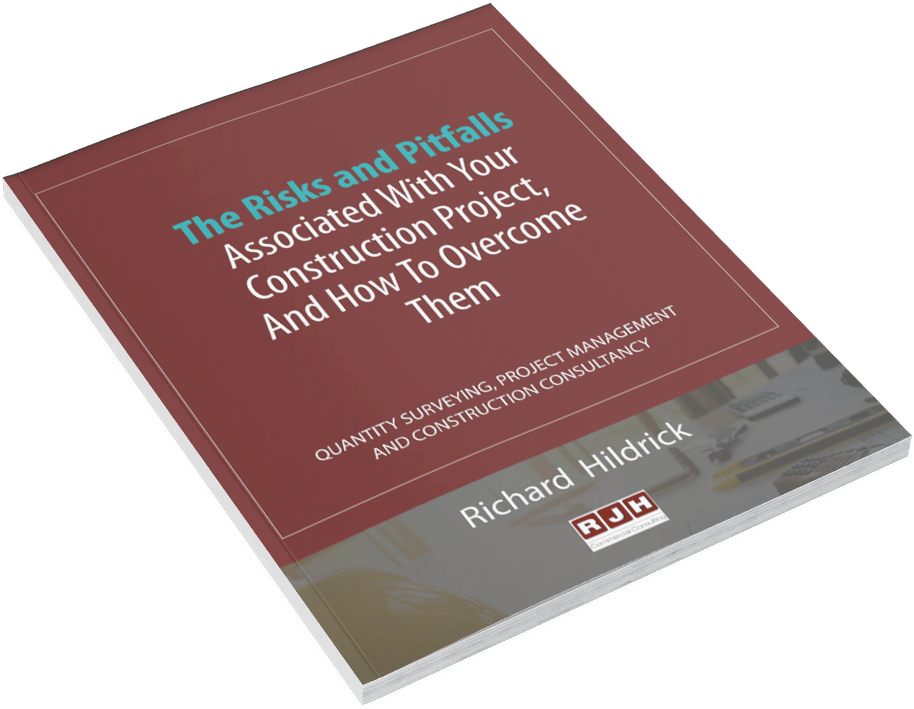
The Risks and Pitfalls Associated With Your Construction Project, And How To Overcome Them
- How to navigate the various application, approval and sign‐off processes at the relevant stages of your project.
- Who to turn to for help when it comes to cost planning a project.
- What you need to know to draw up a water-tight contract.
- How to cover yourself when it comes to rectifying defects.